Accommodations Process & Guidelines
Learn more about accommodations at Holy Cross, request process, and documentation guidelines.
Supporting Access, Belonging and Inclusion
How to Request Accommodations
We use an individualized, interactive approach to reviewing requests and determining reasonable accommodations. Follow the three simple steps below to begin your accommodation request process.


Academic Accommodations
More on Academic Accommodations
First-year students can begin requesting academic accommodations in August for the upcoming academic year, and we work with students throughout the year. Accommodations are not retroactive; we encourage students to connect with our office as early as possible.
We ask that students allow at least 2 weeks for the review process and determination. For accommodations that require additional planning, we encourage early outreach.
Once approved, students receive an Accommodation Letter detailing their approved accommodations for each specific class via email and through the Accommodate portal. After the initial request, students will need to request accommodations each semester by submitting a semester request through the Accommodate portal or scheduling a meeting with an SAS advisor.
The Testing Room is for students with approved testing accommodations. To help ensure a smooth and supportive testing experience, students discuss testing accommodation logistics with their professors.
If the professor is unable to proctor the exam, students must then submit a request through the Accommodate portal in advance. Proctored exams are scheduled Monday through Friday between 8:00 a.m. and 5:00 p.m. Final exam deadlines are shared each semester and should be scheduled in advance.
Housing Accommodations
More on Housing
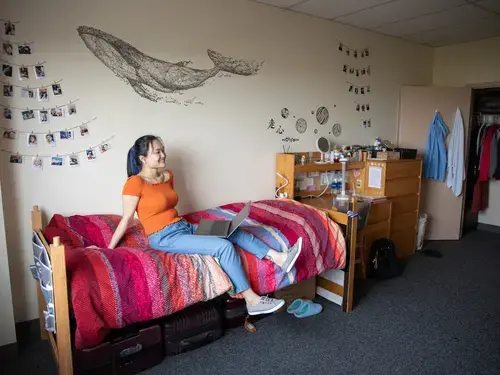
The deadline to formally request housing accommodations for continuing students is February 20, 2026, and the deadline for new first-year and transfer students is June 26, 2026. All students must complete the Housing and Board Agreement, and if applicable the Roommate Matching Survey, by the deadline outlined by the Office of Residence Life and Housing
All four steps of the process must be completed to be considered an on-time request.
- Requesting through the Accommodate portal
- Obtaining and submitting documentation
- Scheduling and meeting with an SAS advisor
- Completing the Housing and Board Agreement, including the Roommate Matching Survey if applicable.
If a housing accommodation need arises outside of the above timeline, students should follow the same request process. Requests past the date(s) above, and are approved, will be placed on a housing accommodation waitlist. The housing accommodation waitlist moves differently from semester to semester, and assignments are based on capacity, availability, and fulfillment of your eligible accommodations.
We ask that students allow at least 2 weeks for the review process and determination.
Service animals are defined as dogs (and in some cases, miniature horses) that are trained to perform specific tasks related to a person’s disability. Service animals are permitted on campus and are not required to be registered with the Office of Student Accessibility Services. However, students can connect with our office so we can support their individual needs, including coordination and communication with campus partners.
Emotional Support Animals (ESAs) are considered a housing accommodation under the Fair Housing Act (FHA) and may be approved for students with documented disabilities who have a disability-related need for the animal.
Students requesting an ESA must submit documentation that meets our guidelines by the housing deadlines.
Students are encouraged to review the College’s Service Animal and Assistance Animal Policy and documentation guidelines below before submitting a request.
If approved, students will be required to:
- Review and sign the College’s Service and Assistance Animal Policy
- Provide emergency contact information
- Submit required veterinary documentation, as applicable
ESAs are approved for housing only and are not permitted in classrooms or other campus buildings. The College will contact roommate(s) or suitemate(s) and/or other residents of the building regarding the animal. All animals on campus must be well-behaved, under control, and free from zoonotic diseases. Animals brought to campus that are not service animals or an approved ESA in a residence hall may be subject to the College’s conduct process.

Dining Accommodations
More on Dining
First-year students can begin requesting dining accommodations in August for the upcoming academic year, and we work with students throughout the year. SAS shares your accommodation needs with Dining Services, which implements the request.
We ask that students allow at least 2 weeks for the review process and determination.
Holy Cross is committed to providing students with nutritious meals that they can enjoy without worrying about food allergies. Access menu information such as ingredients and nutritional information. Contact Dining Services anytime with questions.
At Kimball Main Dining Hall, Dining staff prepare items in a separate kitchen area, including:
- Options for common allergies
- Certified free from the top 9 allergens station (BASE)
If your dietary needs cannot be met with the existing structures and offerings in Dining Services, your SAS Adviser is here to help determine reasonable accommodations.
Transportation Accommodations
More on Transportation
First-year students can begin requesting transportation accommodations in August for the upcoming academic year, and we work with students throughout the year. SAS shares your accommodation needs with The Office of Transportation Services, which implements the request.
We ask that students allow at least 2 weeks for the review process and determination. Do not bring a car to campus unless your parking accommodation has been approved and is in place. Without an approved accommodation, you may receive parking violations. Students are responsible for any fees incurred prior to approval; accommodations are not retroactive. Students without a valid parking permit are not eligible for citation appeals.
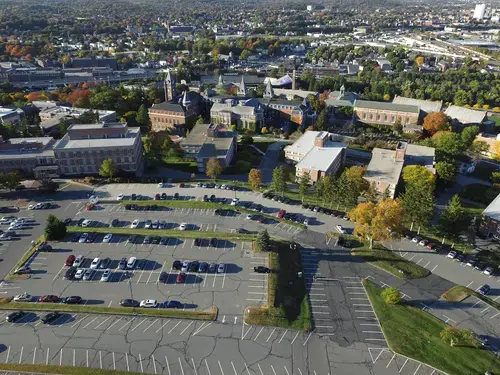
Students who hold a state-issued placard (permanent or temporary) and have an approved parking permit will need to register their placard with the Office of Student Accessibility Services. This will allow students to navigate inside the gated campus, where other parking is available. A placard must be displayed while parked in an accessible parking space at all times. All students must have a valid parking permit to park on campus.
SAS will ask for your DMV placard number and expiration dates.
Costs for parking permits are not covered by SAS and vary from year to year. Please see the parking website for the detailed pricing list.
Students must follow the process for registering their car on campus as outlined on the parking website and the Campus Parking for Students Ignite page.
Documentation
Documentation is an important part of the accommodation process. While disabilities are often ongoing, how they impact a student may change over time and across different environments.
The purpose of documentation is to help us understand each student’s individual experience and how their disability affects them in a higher education setting. This information allows us to make informed decisions about appropriate accommodations and services.
While documentation may establish the presence of a disability, it does not automatically determine which accommodations are reasonable. We consider a range of factors, including the student’s experience, the academic environment, and relevant disability information, as part of an individualized, interactive process.
General Documentation Guidelines
To help us better understand your needs, documentation should:
- Be completed by a qualified provider familiar with your disability
- Be on official letterhead and include the provider’s signature and date
- Include a clear diagnosis of the disability
- Describe the impact of the disability, in a college environment
- Include recommended accommodations, if applicable
Documentation may come from a variety of sources, including healthcare providers, school records (such as an Individualized Education Program (IEP) or 504 plan), or prior accommodation plans, and should reflect your current level of need. Additional information may be requested as part of the interactive process.
Additional Documentation for Specific Accommodations
Documentation for parking pass accommodations specifically should include:
- The frequency and duration of scheduled appointments
- Start and end dates of appointments
- Confirmation of the need for transportation or parking support
- Be on official letterhead
- Be signed and dated by the medical provider
- Be submitted in PDF (uneditable) format
Documentation should:
- Be completed by a qualified provider familiar with your condition
- Be on official letterhead and include the provider’s signature and date
- Include a clear diagnosis of the disability
- Statement of how long the animal has been in your care
- A statement describing how the animal supports the student’s disability
- A statement explaining how the animal relates to the student’s ability to use and benefit from campus housing
Students will also need to submit:
- Any applicable veterinarian documentation, including immunization records, if applicable
- An emergency contact form
- Photo of the animal
Review the Frequently Asked Questions section below if you don’t have documentation. We are happy to talk with you through your situation and understand the next steps and available options.

Accommodation Grievance Process
If a student believes their needs are not being appropriately met, they are encouraged to first contact SAS to discuss their concerns. We will work collaboratively with students to seek a resolution whenever possible.
More on Grievance & Appeal Process
If concerns cannot be resolved informally, a student may submit a written grievance, via email. A grievance may be filed if a student believes they have been denied equal access to the College’s programs, services, or activities on the basis of a disability.
The written grievance should include:
- The student’s name and student ID
- A description of the concern or decision being challenged
- Steps already taken to resolve the issue
- The desired resolution
- Any relevant supporting documentation
Grievances should be submitted to the Director of Student Accessibility Services. The Director will review the grievance, may meet with involved parties, and will provide a written response, typically within 30 days.
If the student is not satisfied with the outcome of the grievance, they may submit a written appeal, via email, to the Vice President of Student Development, or a designated College official, within ten (10) days of the decision.
Appeals should outline the reason for the appeal and the desired resolution. Appeals are reviewed by the Vice President for Student Development or a designated College official, who will review the materials and issue a decision, typically within 30 days. The decision of the Vice President is final.
Students also have the right to file a complaint with external agencies, including:
- U.S. Department of Education - Office for Civil Rights, 5 Post Office Square, 8th Floor, Boston, MA 02109-3921, Phone: 617-289-0111, TTY: 800-877-8339, email: OCR.Boston@ed.gov
- Massachusetts Commission Against Discrimination - 436 Dwight Street, Room 220, Springfield, MA 01103, Phone: 413-739-2145
- U.S. Equal Employment Opportunity Commission - John F. Kennedy Federal Bldg., 475 Government Center, Boston, MA 02203, Phone: 800-669-4000, TTY: 800-669-6820
Students have the right to learn in an environment free from discrimination and harassment. Read the Equal Opportunity and Discriminatory Harassment Policy.
If a student experiences disability-related discrimination or harassment, they may report their concerns to the College’s Title IX and Equal Opportunity office.
Frequently Asked Questions
Students must self-disclose to the Office of Student Accessibility Services and submit a request through the Accommodate portal.
Please note that the Health Services and Admissions portals are separate from Student Accessibility Services, and information is not shared between offices.
Yes, documentation of a disability is typically required. However, we understand that not all students have immediate access to documentation. If you have questions about your situation, we encourage you to contact our office to discuss next steps.
If you are experiencing barriers but do not have a current diagnosis, we encourage you to connect with our office. We can help you explore next steps and available resources.
In some cases, limited funding may be available to support students with demonstrated financial need in obtaining an evaluation, thanks to a generous donation from a Holy Cross alumnus and their family.
Our office can also provide referrals to local providers for assessment, rehabilitation, and other support services. Students are responsible for arranging and covering any costs associated with services outside the College.
The timeline can vary based on student engagement and the nature of the request. In general, students should allow at least two weeks for the review and determination process.
Some accommodations may require additional planning and coordination, so we encourage students to connect with our office as early as possible.
Accommodations are determined on an individualized, case-by-case basis through a review of your request, including information submitted in the Accommodate portal, documentation, and your conversations with our office.
We consider how your disability impacts you in a college setting and identify accommodations that help reduce barriers and support access.
The Office of Student Accessibility Services determines reasonable accommodations and may implement effective alternatives to those requested. Additional information or documentation may be requested as part of the process.
Some accommodations may require additional planning and coordination, so we encourage students to connect with our office early.
Students are encouraged to contact our office at any time. We can review your current accommodations and make adjustments as needed through an interactive process.
No. Documentation must come from a qualified, licensed provider who is not affiliated with the College and is familiar with your disability and ongoing care.
Documentation from family members is not accepted.
Information shared with Student Accessibility Services is kept private. Only members of the SAS team have access to your Accommodate portal and documentation.
Your disability information is not shared with professors or others. Faculty and staff are only notified of your approved accommodations, not your diagnosis, unless you choose to share that information.
In limited circumstances, information may be shared on a need-to-know basis with appropriate College staff to support your access or well-being. Information submitted to our office is not considered confidential. If you report actual or suspected self-harm, suicidal ideation with plan/intent, or a suicide attempt, the College may share this information with appropriate College staff (e.g., the CARE Team/Dean of Students, Counseling and Psychological Services and/or Public Safety) so the College can respond and help protect student safety. In an emergency, the College may involve Public Safety and/or emergency services.
We encourage students to request accommodations as early as possible, especially for those who may require additional planning and coordination.
- Academic Accommodations (Requested each semester for each individual course)
- First-year students can begin requesting accommodations in August
- Continuing students can connect with their SAS advisor at the start of each semester
- Housing Accommodations (Requested once per academic year, or as needed)
- First-year students can begin requesting accommodations in late May
- Continuing students should connect with their SAS advisor at the end of the fall semester for the upcoming academic year
- Deadlines:
- Incoming students: June 26
- Continuing students: February 20
- Dining Accommodations (Requested once per academic year, or as needed)
- First-year students can begin requesting accommodations in August
- Continuing students may connect with their SAS advisor at any time during the academic year
- Transportation & Parking Accommodations (Requested once per academic year, or as needed)
- First-year students can begin requesting accommodations in August
- Continuing students may connect with their SAS advisor at any time during the academic year
Since your classes change each semester, your accommodation needs may also vary. Requesting accommodations each term allows you to tailor them to your specific courses and ensure you have the appropriate support in each class.
Students with temporary conditions or injuries may still be eligible for support. While not all short-term conditions meet the definition of a disability under the Americans with Disabilities Act (ADA), our office can help connect students with appropriate resources and support on campus.
Students are encouraged to stay in communication with Health Services, their Class Dean, and their faculty, as appropriate.
If a temporary condition results in a significant impact on a student’s ability to access their education, students may request accommodations through the Accommodate portal. Documentation from a treatment provider should describe the condition, its expected duration, and any impact.
Yes. Students may choose to involve family members in the accommodation process. To do so, students must provide written permission for our office to communicate with them.
Families can offer support and guidance, but all accommodation requests and decisions are student-driven.
A Personal Care Attendant (PCA) is an individual who provides assistance with daily living needs, such as personal care or health-related support.
PCAs are considered a personal service. Students who require a PCA are responsible for arranging, hiring, and paying for their attendant. The College does not coordinate, fund, or assume liability for PCAs.
To support privacy in shared living spaces, PCAs must be of the same gender or gender identity when assisting in areas such as shared restrooms or other spaces where students may be undressed.
The accessibility office has supported my transition and time at Holy Cross through their collaborative, student-focused, and personable approach towards their work.